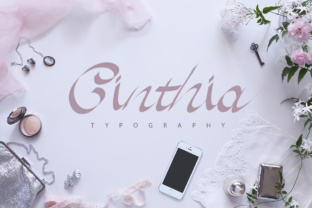
Cinthia: A Curvy Handwritten Typeface for Elegant Branding
There I was, staring at a blank brand board for a boutique wedding stationery client. I needed something that felt personal yet polished, romantic but refined. That’s when I opened up Cinthia — a Script Handwritten typeface with a distinct charm. From the moment I started dragging it into mockups, I knew this wasn’t just another font; it was a storyteller.
Cinthia for Wedding Invitations and Elegant Branding
Cinthia is built on the foundation of hand-drawn elegance. Its curvy letters flow with a natural rhythm, making it feel like each character was carefully penned by an artisan. When I tested it on a set of wedding invitations, it immediately brought warmth and sophistication to the design. The subtle variations in stroke width and the soft, rounded forms gave the project a personal touch without sacrificing professionalism.
What sets Cinthia apart is its balance between delicacy and clarity. It avoids being too ornate, which can often be a problem with many script fonts. Instead, it offers a clean baseline while retaining enough personality to stand out in a sea of digital typography. For someone like me who works on high-end Fonts for luxury brands, that’s exactly what you want.
Using Cinthia in a Café Visual Refresh
Later, I tried Cinthia on a café identity refresh. The goal was to create a warm, inviting visual language that spoke to both locals and visitors. I used it on signage and packaging mockups, and the result was stunning. The Script Handwritten style added a human element that made the branding feel more approachable and less corporate.
I placed it on a chalkboard-style menu sign and paired it with a minimalist sans serif for body text. The contrast worked well, allowing Cinthia to shine as the headline font while keeping the rest of the information legible. In one case, I even used it subtly in the corner of a coffee sleeve mockup as a tagline. The soft curves lent a sense of comfort and craftsmanship, perfectly fitting the vibe of a cozy neighborhood café.
Cinthia in Brand Identity Projects
When building a brand identity, the right Font can make all the difference. Cinthia isn’t a workhorse for long paragraphs, but it’s perfect for logos, headers, and short phrases where emotional resonance matters. I’ve used it in several projects now, including a skincare product line and a handmade jewelry brand, and in every instance, it elevated the visual appeal without overpowering the message.
- Logo Design: Cinthia adds a fluid, artistic quality to logotypes. It’s especially effective for businesses that want to communicate a personal or artisanal touch.
- Brand Board Applications: I layered Cinthia over watercolor textures and gold foil accents, and it blended seamlessly, reinforcing the theme of elegance and handcrafted beauty.
- Business Cards: In small print, Cinthia holds up surprisingly well, especially when using bolder weights or higher contrast styles. Just make sure the letterforms are clear enough for quick readability.
Cinthia for Packaging Mockups and Product Labels
I recently used Cinthia on a packaging mockup for a local bakery selling custom cakes and pastries. The font was featured on a gift box label and the back of a branded cupcake wrapper. In both cases, it added a sense of bespoke quality. The handwritten feel of Cinthia gave the impression that each item was lovingly crafted, not mass-produced.
One thing I noticed early on is that Cinthia really benefits from good spacing. Because it’s a script font, the characters naturally have some overlap and connection points. But when used correctly — with proper kerning and tracking — it becomes incredibly readable even in smaller sizes. I recommend testing it at 8pt to ensure it doesn’t lose its shape or become illegible in final print materials.
Cinthia in Web and Social Media Design
On screen, Cinthia performs best as a display or accent font. I used it on a homepage hero section for a creative studio website and saw how it drew attention instantly. The softness of the curves made it easy on the eyes, while still commanding presence above the fold.
For social media layouts, I applied Cinthia to Instagram post headers and quote graphics. It looked fantastic against minimal backgrounds, adding a layer of sophistication that matched the brand’s aesthetic. However, I did notice that for longer captions or body copy, it’s better to switch to a more neutral typeface to maintain readability across devices.
Font Pairing Tips with Cinthia
Pairing Cinthia with other Fonts requires a bit of finesse. It works beautifully alongside a clean, modern sans serif for a balanced look — think something like Montserrat or Raleway. These pairings help keep the overall design grounded while letting Cinthia take center stage in headlines and titles.
If you’re going for a more traditional or vintage feel, consider pairing it with a classic serif font such as Playfair Display or Lora. The contrast between the flowing script and structured serifs creates a visually appealing hierarchy and adds depth to your brand assets.
Cinthia’s Strengths and Limitations
Cinthia shines in applications where elegance and artistry are key. It’s ideal for:
- Wedding invites and thank-you cards
- Handmade product labels and packaging
- Editorial design for lifestyle or fashion magazines
- Social media banners and quote graphics
- Shop signs and storefront branding
However, it’s not the best choice for large bodies of text or formal corporate documents. The handwriting-inspired nature of Cinthia means it lacks the uniformity needed for dense reading material. If you're designing a legal document or a financial report, this isn’t the font for you. Stick to it for display purposes and use it sparingly in supporting roles.
Testing Cinthia Before Client Work
Before recommending Cinthia to clients, I always test it in multiple contexts. Here’s my go-to checklist:
- Create a logo draft with it in various sizes and colors.
- Apply it to a business card layout and check legibility at 8–10pt.
- Use it in a web header and see how it looks across different screen resolutions.
- Try it on a product label mockup with background textures or gradients.
- Place it in a social media layout to evaluate its performance in mobile view.
This helps determine if Cinthia is the right fit for the project. I also look for alternates and ligatures, which add variety and visual interest. Fortunately, Cinthia includes a nice range of stylistic options that let you customize the feel of the typeface depending on the context.
Cinthia as a Commercial Font
As a professional designer, I always double-check licensing before using any Font in client work. Cinthia is a premium Script Handwritten typeface, so it’s important to confirm whether the license allows for commercial use, especially in branding, packaging, templates, or merchandise. Many designers overlook this step, only to face issues later when a client wants to print products or launch a website.
Once licensing is sorted, Cinthia can be integrated into most design tools like Adobe Illustrator, Photoshop, and InDesign. It’s also available in webfont formats if you need to embed it into a site. I’ve found it renders consistently across platforms, which is reassuring when delivering final files to clients or developers.
Cinthia in Creative Studio Identities
In one recent project, I helped a creative studio refine their identity. They wanted something that stood out but still felt professional. Cinthia became the cornerstone of their new logo system and brand guidelines. Used in combination with a bold geometric sans serif, it created a strong visual contrast that emphasized creativity and expertise.
The team loved how Cinthia brought a human element to their otherwise tech-forward services. It softened the edges of the brand while still maintaining a modern feel. Whether it was printed on a business card or displayed in a YouTube banner, Cinthia delivered the same level of sophistication and warmth.
Final Notes on Cinthia’s Use Cases
Cinthia is not a jack-of-all-trades font, but it does master its niche. If your project calls for a delicate, handcrafted look — especially in the realms of weddings, handmade goods, or lifestyle branding — Cinthia is worth considering. It has a timeless appeal that fits both traditional and contemporary aesthetics.
That said, it’s crucial to understand where Cinthia excels and where it might fall short. Avoid using it in long-form content or environments where clarity is paramount. Instead, save it for those special moments when you want to evoke emotion, luxury, or a personal touch.
Overall, Cinthia has earned a permanent spot in my Fonts library. It’s versatile, expressive, and brings a unique flair to any design that needs a little extra love. Whether you're crafting a brand identity or just looking for a standout option for a specialty project, Cinthia is ready to elevate your work — as long as you use it wisely and with purpose.